The traveling exhibition ‘Divine Wisdom – Divine Nature’, celebrating 400 years of Rosicrucian Manifestos which first opened in Germany in September last year and was shown in Switzerland in the spring of this year, opened in the Bibliotheca Philosophica Hermetica on 11 September 2015.
Each exhibition is devoted to the message of the Rosicrucian Manifestos in the visual language of the 17th century, showing the stunning engravings in the works of Heinrich Khunrath, Daniel Mögling, Robert Fludd, Michael Maier and Stephan Michelspacher, but will also have a special focus, depending on the setting of each successive exhibition.
While it is uncertain whether this exhibition may be brought to the United States, and it is unlikely that many here will be able to travel to see it at its current location, it is none the less well worth knowing about, and for those who cannot visit but have a strong interest in the subject, the catalogue is available in several languages and also as an ebook.
http://www.ritmanlibrary.com/books/rosicrucians/jose-bouman/divine-wisdom-divine-nature-2/
The BPH has a strong history of organizing exhibitions on the Rosicrucian theme. In 1995 the BPH organized together with the Herzog-August-Bibliothek in Wolfenbüttel the exhibition Cimelia Rhodostaurotica, followed in 1998 by the exhibition De Roep van het Rozenkruis. Vier Eeuwen Levende Traditie, which was organized with the Lectorium Rosicrucianum and the Royal Library in The Hague. The anniversary exhibition in Calw is also conceived as the third and final part of a set of exhibitions previously organized by the BPH in Florence in 1999 (Marsilio Ficino and the Return of Hermes Trismegistus) and in Venice in 2002 (Magic, Alchemy and Science 15th-18th centuries). The Florence exhibition celebrated the rediscovery of the Hermetic sources in the West, ending with Paracelsus, the ‘Trismegistus Germanus’ as he was also known; the Venice exhibition highlighted the influence of Hermetic thought in Western Europe, ending with the publication of the Geheime Figuren der Rosenkreuzer.
For more information, please see the announcement: http://www.ritmanlibrary.com/2015/08/goddelijke-wijsheid-goddelijke-natuur/
and also explore the rest of the wonderful Ritman Library Website: http://www.ritmanlibrary.com/
Friday, October 30, 2015
Saturday, October 10, 2015
Further Alchemical Explorations from the Laboratory of Bollingen
It should be noted first of all, that this entry is not announcing a newly published book, nor even a newly discovered one over which I am enrapt with the initial thralls of excitement. I first read this book nearly 30 years ago, and while I have several of this author's titles lying about, it was actually the discovery that my copy of this book had somehow gone missing that lead me to consider recommending that others read it.
Those who know me well know that from time to time I will extoll the wisdom of that great Mage, the man who crafted the modern Temple of the Sun, Moon, and Soul, at Bollingen with his own hands, which should qualify him as a mason far more legitmately than most who claim that title today.
Of course, I refer to the Arch Druid, Spiritual Artificer, Alchemist, and Grand Necromancer of the modern era, whom we all know by his mundane name of Dr. Carl G. Jung. Those who know little of him will describe him as a psychologist, and are comfortable dismissing him thusly, probably thinking the title is defined in the terms of one of his teachers, Freud, with whom he ultimately disagreed, and not with any definition that describes how Jung himself took over that mantle and radically changed the ways in which we study and understand the human psyche.
However, I am not in this entry recommending any of Jung's books. Rather, I am recommending a title written by a life time student and collaborator of Jung's, Marie Louise von Franz. One of my favorite of her titles, On Divination and Synchronicity: The Psychology of Meaningful Chance (Studies in Jungian Psychology), published in 1980, afforded my eyes a magical glimpse into the mechanics of our world, but one which I would recommend even more to any Mason, is the brief focus of this blog entry. I refer to is a small book called Alchemical Active Imagination, which was first published in 1979.
At least a handful of Masons, and certainly a few I know will have read to some level of depth, the works of Carl Jung. Of course, he was the man who more than anyone else, including his early mentor Sigmund Freud, made modern Psychology what it is. But as we have been reminded with the final publication of his master work, The Red Book (Liber Novus), he was also a Master Magician of the Psyche. At the heart of all this was Jung's interest in Alchemy and Gnosticism.
Jung's early publication, The Seven Sermons to the Dead (Septem Sermones ad Mortuos) which represents perhaps the central core of his Red Book, deals with a gnostic view of wisdom and also reflects the benefits of his approach to Alchemical studies.
From the liner notes of Alchemical Active Imagination:
Although alchemy is popularly regarded as the science that sought to transmute base physical matter, many of the medieval alchemists were more interested in developing a discipline that would lead to the psychological and spiritual transformation of the individual. C. G. Jung discovered in his study of alchemical texts a symbolic and imaginal language that expressed many of his own insights into psychological processes. In this book, Marie-Louise von Franz examines a text by the sixteenth-century alchemist and physician Gerhard Dorn in order to show the relationship of alchemy to the concepts and techniques of analytical psychology. In particular, she shows that the alchemists practiced a kind of meditation similar to Jung's technique of active imagination, which enables one to dialogue with the unconscious archetypal elements in the psyche. Originally delivered as a series of lectures at the C. G. Jung Institute in Zurich, the book opens therapeutic insights into the relations among spirit, soul, and body in the practice of active imagination.

A primary field of interest and writing of hers was alchemy, which von Franz always contextualized with Jungian psychological perspectives. She edited, translated and commented on Aurora Consurgens, attributed to Thomas Aquinas on the problem of opposites in alchemy and in her final years, she commented extensively on the Arabic alchemical manuscript of Muḥammad Ibn Umail Hal ar-Rumuz (Book of the explanation of the symbols). For alchemists, imaginatio vera was an important approach to matter. It resembles in many aspects the active imagination as elucidated by C. G. Jung. Marie-Louise von Franz lectured in 1969 about active imagination and alchemy and also wrote about it in in Man and His Symbols. Active imagination may be described as conscious dreaming. In Man and His Symbols, she described it as follows:
Active imagination is a certain way of meditating imaginatively, by which one may deliberately enter into contact with the unconscious and make a conscious connection with psychic phenomena.
A third field of interest and research was about synchronicity, psyche and matter, and numbers. It seems to have been triggered by Jung, whose research had led him to the hypothesis about the unity of the psychic and material worlds, i.e., that they are one and the same, just different manifestations.
For this and many other reasons, both von Franz' and Jung's work on Active Imagination, Gnosticism, and Alchemy should be considered reading material of high priority for Freemasons. In my own case, I tend to view the Jungian approach to Alchemy and Gnostic understanding of greater contemporary value than the more traditional approaches to Alchemy. As much as I love ritual, I know that all too many can get lost in it and never come to recognize its purpose. When one engages Jung's psychological approaches in depth, one in essence is exploring a modern extrapolation of the Masonic journey. One may wish to bear in mind that Jung's grandfather was not only a Master Mason, but a Grand Master of the Swiss Lodge, and may be forgiven for imagining that he had some awareness of Masonic studies as a result.
Those who know me well know that from time to time I will extoll the wisdom of that great Mage, the man who crafted the modern Temple of the Sun, Moon, and Soul, at Bollingen with his own hands, which should qualify him as a mason far more legitmately than most who claim that title today.
Of course, I refer to the Arch Druid, Spiritual Artificer, Alchemist, and Grand Necromancer of the modern era, whom we all know by his mundane name of Dr. Carl G. Jung. Those who know little of him will describe him as a psychologist, and are comfortable dismissing him thusly, probably thinking the title is defined in the terms of one of his teachers, Freud, with whom he ultimately disagreed, and not with any definition that describes how Jung himself took over that mantle and radically changed the ways in which we study and understand the human psyche.
However, I am not in this entry recommending any of Jung's books. Rather, I am recommending a title written by a life time student and collaborator of Jung's, Marie Louise von Franz. One of my favorite of her titles, On Divination and Synchronicity: The Psychology of Meaningful Chance (Studies in Jungian Psychology), published in 1980, afforded my eyes a magical glimpse into the mechanics of our world, but one which I would recommend even more to any Mason, is the brief focus of this blog entry. I refer to is a small book called Alchemical Active Imagination, which was first published in 1979.
At least a handful of Masons, and certainly a few I know will have read to some level of depth, the works of Carl Jung. Of course, he was the man who more than anyone else, including his early mentor Sigmund Freud, made modern Psychology what it is. But as we have been reminded with the final publication of his master work, The Red Book (Liber Novus), he was also a Master Magician of the Psyche. At the heart of all this was Jung's interest in Alchemy and Gnosticism.
Jung's early publication, The Seven Sermons to the Dead (Septem Sermones ad Mortuos) which represents perhaps the central core of his Red Book, deals with a gnostic view of wisdom and also reflects the benefits of his approach to Alchemical studies.
From the liner notes of Alchemical Active Imagination:
Although alchemy is popularly regarded as the science that sought to transmute base physical matter, many of the medieval alchemists were more interested in developing a discipline that would lead to the psychological and spiritual transformation of the individual. C. G. Jung discovered in his study of alchemical texts a symbolic and imaginal language that expressed many of his own insights into psychological processes. In this book, Marie-Louise von Franz examines a text by the sixteenth-century alchemist and physician Gerhard Dorn in order to show the relationship of alchemy to the concepts and techniques of analytical psychology. In particular, she shows that the alchemists practiced a kind of meditation similar to Jung's technique of active imagination, which enables one to dialogue with the unconscious archetypal elements in the psyche. Originally delivered as a series of lectures at the C. G. Jung Institute in Zurich, the book opens therapeutic insights into the relations among spirit, soul, and body in the practice of active imagination.

A primary field of interest and writing of hers was alchemy, which von Franz always contextualized with Jungian psychological perspectives. She edited, translated and commented on Aurora Consurgens, attributed to Thomas Aquinas on the problem of opposites in alchemy and in her final years, she commented extensively on the Arabic alchemical manuscript of Muḥammad Ibn Umail Hal ar-Rumuz (Book of the explanation of the symbols). For alchemists, imaginatio vera was an important approach to matter. It resembles in many aspects the active imagination as elucidated by C. G. Jung. Marie-Louise von Franz lectured in 1969 about active imagination and alchemy and also wrote about it in in Man and His Symbols. Active imagination may be described as conscious dreaming. In Man and His Symbols, she described it as follows:
Active imagination is a certain way of meditating imaginatively, by which one may deliberately enter into contact with the unconscious and make a conscious connection with psychic phenomena.
A third field of interest and research was about synchronicity, psyche and matter, and numbers. It seems to have been triggered by Jung, whose research had led him to the hypothesis about the unity of the psychic and material worlds, i.e., that they are one and the same, just different manifestations.
For this and many other reasons, both von Franz' and Jung's work on Active Imagination, Gnosticism, and Alchemy should be considered reading material of high priority for Freemasons. In my own case, I tend to view the Jungian approach to Alchemy and Gnostic understanding of greater contemporary value than the more traditional approaches to Alchemy. As much as I love ritual, I know that all too many can get lost in it and never come to recognize its purpose. When one engages Jung's psychological approaches in depth, one in essence is exploring a modern extrapolation of the Masonic journey. One may wish to bear in mind that Jung's grandfather was not only a Master Mason, but a Grand Master of the Swiss Lodge, and may be forgiven for imagining that he had some awareness of Masonic studies as a result.
Friday, October 9, 2015
Martinism and Masonry: A Volume of Essays in Spanish from Masonica.es
CULTURA MASÓNICA Nº 23
Martinismo y masonería
Author: VARIOS AUTHORS; Jato Agüera, José Miguel
Colection: CULTURA MASÓNICA
Un extenso trabajo monográfico de 198 páginas en el que varios martinistas franceses y españoles de reconocido prestigio mundial explican desde diferentes ángulos las peculiaridades de esta sociedad iniciática tan cercana a la masonería.
Una obra que aclara de un modo preciso y riguroso todo lo que un masón quiere saber sobre el martinismo.
A comprehensive monograph of 198 pages in which several French and Spanish world reknowned martinists explain from different angles the peculiarities of this initiatory society which is so close to Freemasonry.
A work that clarifies in precise and rigorous form everything a Mason needs to know about Martinism.
Sumario Año VII / Nº 23 / OCTUBRE 2015
Summary (Year VII / No. 23 / OCTOBER 2015)
7| Cuadro de colaboradores (Table of Contents)
11| Editorial Abrir Espacios de Comprensión entre La Masoneriá y el Martinismo
( Editorial – To open spaces for understanding between Freemasonry and Martinism)
15| Algunas Explicaciones que un Masón y Martinista comentaría con un hermano Masón acerca del Martinismo.
(Some Explanations that a Brother (who is both) Mason and Martinist would Comment About to a Brother Masón Concerning Martinism.)
José Miguel Jato
43 | Papus y La Orden Martinsita
(Papus and the Martinist Order)
Sâr Amorifer, P.I.
57 | Comentarios sobre el Ritual Martinista
Comments about Martinist Ritual
87 | Louis-Claude de Saint-Martin...¿Francasón y Martinista?
Louis-Claude de Saint-Martin... Freemason and Martinist?
Alfonso Marcuello
99 |Louis-Claude de Saint-Martin, El «Filósofo Desconocido»
Louis-Claude de Saint-Martin, The “Unknown Philosopher.”
Jean-Marc Vivenza
121 | Enigmático Y Ancestral Legado de la Tradición Martinista
La Oración del Corazón
Seguro Sendero y Llave del « Ingreso en la realidad»
(Enigmatic and ancestral legacy of the Martinist Tradition
Prayer of the Heart
Safe Key and Path of the “Integration of Being”
Manuel M. Arce
139 | Louis-Claude de Saint-Martin y Los Ángeles
Louis-Claude de Saint-Martin and the Angels
Jean-Marc Vivenza
159 | Anales Martinistas desde Los Orígenes Hasta Nuestros Días
Martinist Annals from the Origins until Our Time.
Serge Caillet
183 | Catálogo Editorial de Masonica.es
Editorial Catalog of Masonica.es
Click to view order page on masonica.es
(Please note: This journal is available only in a Spanish Language version. English translations of essay titles are provided here only for the benefit of Anglophone only readers, and is not meant to suggest that any materials in the book are in English. They are not.)
Martinismo y masonería
Author: VARIOS AUTHORS; Jato Agüera, José Miguel
Colection: CULTURA MASÓNICA
Un extenso trabajo monográfico de 198 páginas en el que varios martinistas franceses y españoles de reconocido prestigio mundial explican desde diferentes ángulos las peculiaridades de esta sociedad iniciática tan cercana a la masonería.
Una obra que aclara de un modo preciso y riguroso todo lo que un masón quiere saber sobre el martinismo.
A comprehensive monograph of 198 pages in which several French and Spanish world reknowned martinists explain from different angles the peculiarities of this initiatory society which is so close to Freemasonry.
A work that clarifies in precise and rigorous form everything a Mason needs to know about Martinism.
Sumario Año VII / Nº 23 / OCTUBRE 2015
Summary (Year VII / No. 23 / OCTOBER 2015)
7| Cuadro de colaboradores (Table of Contents)
11| Editorial Abrir Espacios de Comprensión entre La Masoneriá y el Martinismo
( Editorial – To open spaces for understanding between Freemasonry and Martinism)
15| Algunas Explicaciones que un Masón y Martinista comentaría con un hermano Masón acerca del Martinismo.
(Some Explanations that a Brother (who is both) Mason and Martinist would Comment About to a Brother Masón Concerning Martinism.)
José Miguel Jato
43 | Papus y La Orden Martinsita
(Papus and the Martinist Order)
Sâr Amorifer, P.I.
57 | Comentarios sobre el Ritual Martinista
Comments about Martinist Ritual
87 | Louis-Claude de Saint-Martin...¿Francasón y Martinista?
Louis-Claude de Saint-Martin... Freemason and Martinist?
Alfonso Marcuello
99 |Louis-Claude de Saint-Martin, El «Filósofo Desconocido»
Louis-Claude de Saint-Martin, The “Unknown Philosopher.”
Jean-Marc Vivenza
121 | Enigmático Y Ancestral Legado de la Tradición Martinista
La Oración del Corazón
Seguro Sendero y Llave del « Ingreso en la realidad»
(Enigmatic and ancestral legacy of the Martinist Tradition
Prayer of the Heart
Safe Key and Path of the “Integration of Being”
Manuel M. Arce
139 | Louis-Claude de Saint-Martin y Los Ángeles
Louis-Claude de Saint-Martin and the Angels
Jean-Marc Vivenza
159 | Anales Martinistas desde Los Orígenes Hasta Nuestros Días
Martinist Annals from the Origins until Our Time.
Serge Caillet
183 | Catálogo Editorial de Masonica.es
Editorial Catalog of Masonica.es
Click to view order page on masonica.es
(Please note: This journal is available only in a Spanish Language version. English translations of essay titles are provided here only for the benefit of Anglophone only readers, and is not meant to suggest that any materials in the book are in English. They are not.)
Wednesday, September 30, 2015
The Best Book on Masonic Philosophy Never Written by a Mason
Regardless of whether that is so or whether I am just being my usual cynical self, I have for a long time been fascinated by materials published with the Mason in mind. While my first love is books on ritual, followed by history, I also like books geared to masonic education and the philosophy of Freemasonry.
You know the type; titles that purport to substantiate claims that Freemasonry "makes good men better." Behind them all is the notion that an individual becomes a better person by become more self aware, and that, in some Dan Brownsian way, becoming truly self aware, we may become, if not gods, then at least somewhat more akin to them.
Although this post may sound, thus far, to be dripping with sarcasm, it really isn't. I happen to believe that perhaps the most significant thing we can accomplish in the realm of spiritual or self development is true and profound consciousness. I'm talking about the kind which is characterized by awakening from the trance of mundane life and the mindless pursuit of material existence which constitutes most people's awareness. That which is the point of Buddhism, the Tao, and even the Sufi. That is of course, the goal of Esoteric Freemasonry, and as much as most mainstream Masons manage to avoid it, it is also the main purpose of so-called "regular" Freemasonry.
I have been reading Masonic literature for years, and one thing that became clear to me a long time ago, was that there were quite a few authors who had learned how to talk about the subject, but precious few who seemed to understand what they were writing about.
So, along the way, I began to examine literature about consciousness which was outside the Masonic tradition. From what I can see, many other Masons have in recent years done the same thing. I plan on highlighting some relevant texts here from time to time, and will start with what is most likely the smallest and most unassuming one I have come across, but which focuses intently on the subject of self awareness. It is not grounded in Masonic philosophy, but it speaks coherently on the subject which is at the heart of Masonic philosophy and is therefore a title I readily recommend to all.
This book does not make any pretense at being an academic text, nor of being grounded in a philosophical tradition of scholarship. It is written in colloquial and intentionally simple language. Unlike Freemasonry, it does not rely on a peculiar system of morality, nor does it veil its message in allegory illustrated by symbols. Unlike the traditional approach of Freemasonry, this text is as straight and as direct and as simple as the author could make a work dealing with such a weighty subject. That is one of the reasons I think most Freemasons who are interested in something more than cigars, whisky, and self congratulatory titles, should read this short work.
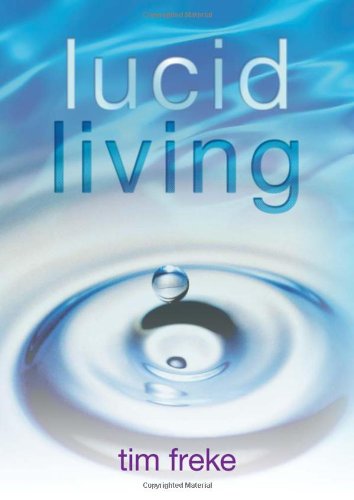
While I think that those who pursue the self-congratulatory titles are probably beyond hope, to the rest, I recommend you pour a single malt, light a maduro, sit back and read this book, as the author recommends, from cover to cover in one sitting. Don't worry, that's why it was written so that the average person can read it in an hour. It is worth the effort, and although I tend to avoid titles that seem to fit the genre we call "new age", this one is worth the read. It will, as the author suggests,"will turn your world inside out." It is a small book that makes a big claim. Unlike so much today, in "Lucid Living" Tim Freke keeps his word. This book lives up to the hype.
Freke is able to do this because he casts an almost surgical glance at just what it is that we do with our brains, and just how we manage to fool ourselves most of the time. He dissects how we construct our understanding of experience, because he has been able to grasp how we are actually responsible for creating that experience, which makes it possible for him to help us deconstruct the illusions we have invented to trap ourselves.It is a subtle process, this matter of uncreating our self illusions. For me at least, it has taken time. I agreed with most of the contents of this book for a long time before I began to "get" it. Perhaps you won't be as dense as I have been, but then I spent decades in an academic setting which causes us to become comfortable in the labyrinth we call the mind.
This book has been one of the tools which has helped me shake myself free from the humbuggery of my own thought processes. I can think of no group of people in greater need of being shaken free from humbuggery than those who belong to the society of Freemasons. So go out and read it.
PS: It should make your Freemasonic hearts pleased to know you can buy a digital edition for next to nothing!
Lucid Living: A Book You Can Read in One Hour That Will Turn Your World Inside Out
Sunday, September 27, 2015
Continuing Attacks on African Traditional Religions in Brazil by Evangelical Terrorists
![]() |
| 11year old victim of Evangelical attackers |
Since the Hedge last commented upon the situation in Brazil, the attacks have not stopped. The reports below show how bad the situation is.
After a second attack on his Terreiro (Afro-Brazilian Religious Temple) Pai Ribamarzinho de Goiás closed it down. Through physical violence, intimidation and hatred, the evangelical thugs appear to be waging an all out attack on traditional religions. (Thanks to Alberto Jorge Silva for this video)
![]() |
| Bible planted by arsonists |
”The Terreiro was invaded a month ago and since then we have slept here to protect the property. It happened yesterday when I went to my home, around 6 am, a neighbor called me alerting me of the fire. When I arrived everything was destroyed” said the priest Babalorixá Pippa, 46, known as Babazinho. He ran the Terreiro that functioned in Santo Antônio do Descoberto.
He and his wife, the Mãe de Santo (Priestess) Rejiane Varjão, held a charity supper to raise funds and thus rebuild the place, as it suffered a loss of approximately R $ 30 thousand ($7600) as a result of the previous attack.
Babazinho stated “Now it's all over. We want to get out of here because we are afraid of someone doing something against our own lives. We are here with the moving van without knowing where to take what's left. The neighbors know who was responsible, but I understand they fear to talk. I believe it was an act of religious intolerance because I found a Bible inside after the fire.”
![]() |
| Child attending religious service attacked by Evangelicals |
The traditional peoples of African origin and religious communities see themselves as cultural resistance units in the country. These groups are characterized by maintenance of an African civilization which has survived in Brazil, constituting its own territories marked by community life, mutual aid, the reception and provision of social services.
* * *
![]() |
| Mãe Dede Iansã |
![]() |
| Protest against Evangelical Attacks |
Lest US residents believe their nation has a better record, it should be noted that the African derived religions of Brazil are recognized officially by the Brazilian government as a national patrimony while too often in the US, local police forces are given free reign to invade religious festivals of African derived traditions, confiscating religious objects and arresting worshippers, as used to be done in Brazil a hundred years ago.
Sunday, September 13, 2015
Max Gesner Beauvoir Dies
Max Gesner Beauvoir, recognized by many as the chief religious leader in Haitian Vodou died on Saturday Sept 12, 2015 at the age of 79 in the Haitian Capitol, Port au Prince, according to his family. A Haitian biochemist and houngan. Max Beauvoir held one of the highest titles of Voudou priesthood known as "Supreme Servitur", or supreme servant . This title is given to Houngans and Mambos; Voudou Priest and Priestesses, who have a great and very deep knowledge of the religion, also because of elder status within the religion. As Supreme Servitur, Max was seen as being of the highest authority within Voudou .
Beauvoir graduated in 1958 from City College of New York with a degree in chemistry. He continued his studies at theSorbonne from 1959 to 1962, when he graduated with a degree in biochemistry. In 1965, at Cornell Medical Center, he supervised a team in synthesizing metabolic steroids. This led him to a job at an engineering company in northern New Jersey, and later to a period as engineer at DEC in Massachusetts. His interest in steroids led him to experiment with hydrocortisone synthesized from plants. Beauvoir held a patent on the process of obtaining hecogenin from plant leaves until 1993. However, the death of his father led him to move back to Haiti in January 1973 and become a vodou priest.
In 1974, he founded Le Péristyle de Mariani, a Hounfour in his home (which also served as a village clinic) in the village of Mariani. He had a troubled relationship with the ruling Duvalier family. While he urged that they do more to meet the medical needs of the poor, his status as a houngan kept him from being subjected to much of the wanton violence exacted by theTonton Macoutes against critics.
During this period, he founded the Group for Studies and Research on the African Tradition (French: Groupe d'Etudes et de Recherches Traditionnelles, GERT) with a group of scholars, and later founded the Bòde Nasyonal in 1986 to counter the effects of the post-Duvalier dechoukaj violence which had targeted both Vodou practitioners and the Tonton Macoutes paramilitary, both of which had been used by the Duvalier regime to oppress the Haitian people.
In 1996, Beauvoir founded The Temple of Yehwe, a Washington, D.C.-based non-profit organization for the promotion of education concerning Afro-American religion. In 1997, he became involved with the creation of the KOSANBA group at the University of California, Santa Barbara. Beauvoir was interviewed in 1982 by Canadian ethnobotanist Wade Davis for his 1985 book The Serpent and the Rainbow, later made into a film, in which the actor Paul Edward Winfield, played a figure based losely upon Max Beauvoir.
Vodou is part of the culture of Haitians inherited from their African slave ancestors of the 16th and 17th centuries. It was forbidden during the time of French colonization and during slavery. The Vodou religion, which like other African Diasporic Religions combines African spiritual practice and cosmology with elements of belief, ritual, and cosmology of Roman Catholicism. Since Haitian independence in 1804, it has none the less been exposed to the often open hostility of Catholic Clergy and more recently Protestant Evangelical sects which have often actively attacked, with personal physical violence, the practitioners of African derived spiritual traditions throughout the Americas, as well as in Africa.
Ati Houngan Max Gesner Beauvoir always seemed to take the time to answer inquiries personally. While he had no reason to be more than marginally aware of who I was, I knew some people who communicated with him fairly regularly. However, on those occasions when I reached out to him, he always took the time to respond to me personally, and sometimes in some significant length and detail. I have heard the same from others who contacted him over the years., He demonstrated in my opinion, all the characteristics one would expect of an individual of profound spiritual awareness. Most significantly, both humility and kindness. Me he be at peace with the ancestors.
Yon mapou Ginen tonbe! Max ou janbe, men poto mitan pa tonbe !
Montray Kreyol
24 horas (en español)
Obituary in the Washington Post
In New York TImes
In the Daily Mail (England)
The Straits Times (Singapore)
Beauvoir graduated in 1958 from City College of New York with a degree in chemistry. He continued his studies at theSorbonne from 1959 to 1962, when he graduated with a degree in biochemistry. In 1965, at Cornell Medical Center, he supervised a team in synthesizing metabolic steroids. This led him to a job at an engineering company in northern New Jersey, and later to a period as engineer at DEC in Massachusetts. His interest in steroids led him to experiment with hydrocortisone synthesized from plants. Beauvoir held a patent on the process of obtaining hecogenin from plant leaves until 1993. However, the death of his father led him to move back to Haiti in January 1973 and become a vodou priest.
In 1974, he founded Le Péristyle de Mariani, a Hounfour in his home (which also served as a village clinic) in the village of Mariani. He had a troubled relationship with the ruling Duvalier family. While he urged that they do more to meet the medical needs of the poor, his status as a houngan kept him from being subjected to much of the wanton violence exacted by theTonton Macoutes against critics.
During this period, he founded the Group for Studies and Research on the African Tradition (French: Groupe d'Etudes et de Recherches Traditionnelles, GERT) with a group of scholars, and later founded the Bòde Nasyonal in 1986 to counter the effects of the post-Duvalier dechoukaj violence which had targeted both Vodou practitioners and the Tonton Macoutes paramilitary, both of which had been used by the Duvalier regime to oppress the Haitian people.
In 1996, Beauvoir founded The Temple of Yehwe, a Washington, D.C.-based non-profit organization for the promotion of education concerning Afro-American religion. In 1997, he became involved with the creation of the KOSANBA group at the University of California, Santa Barbara. Beauvoir was interviewed in 1982 by Canadian ethnobotanist Wade Davis for his 1985 book The Serpent and the Rainbow, later made into a film, in which the actor Paul Edward Winfield, played a figure based losely upon Max Beauvoir.
Vodou is part of the culture of Haitians inherited from their African slave ancestors of the 16th and 17th centuries. It was forbidden during the time of French colonization and during slavery. The Vodou religion, which like other African Diasporic Religions combines African spiritual practice and cosmology with elements of belief, ritual, and cosmology of Roman Catholicism. Since Haitian independence in 1804, it has none the less been exposed to the often open hostility of Catholic Clergy and more recently Protestant Evangelical sects which have often actively attacked, with personal physical violence, the practitioners of African derived spiritual traditions throughout the Americas, as well as in Africa.
Ati Houngan Max Gesner Beauvoir always seemed to take the time to answer inquiries personally. While he had no reason to be more than marginally aware of who I was, I knew some people who communicated with him fairly regularly. However, on those occasions when I reached out to him, he always took the time to respond to me personally, and sometimes in some significant length and detail. I have heard the same from others who contacted him over the years., He demonstrated in my opinion, all the characteristics one would expect of an individual of profound spiritual awareness. Most significantly, both humility and kindness. Me he be at peace with the ancestors.
Yon mapou Ginen tonbe! Max ou janbe, men poto mitan pa tonbe !
Montray Kreyol
24 horas (en español)
Obituary in the Washington Post
In New York TImes
In the Daily Mail (England)
The Straits Times (Singapore)
Thursday, September 3, 2015
The 2015 Esoteric Book Conference is upon us!
The 2015 Esoteric Book Conference will be in Seattle on September 26th and 27th, 2015.
The Esoteric Book Conference is an annual international event to bring together authors, artists, publishers and bookmakers working in the field of esotericism. In addition to presentations by notable authors and scholars, the conference opens it doors to publishers and booksellers showcasing new & used books as well as rare and hard-to-find esoteric texts. For two days the conference hosts the largest selection of esoteric books under one roof. Contemporary esoteric publishing, finepress book arts and antiquarian texts are offered to augment the libraries of readers, scholars and collectors alike.
This multi-disciplined conference will feature presentations by contemporary authorities researching and working in esoteric currents both East & West. Western Esotericism, Gnosticism, Theosophy, Mythology, Shamanism, Rosicrucianism, Sacred Sciences, Occulture and
World Religions are among the subjects to be represented. An esoteric book fair and art show will also be on site allowing education, vending and networking in a unique field of literary, historical and cultural arts.
This conference offers several opportunities for promotion, networking and exhibition for publishers, authors and artists who work in the esoteric publishing field. There will be two days of presentations wherein authors and scholars may present lectures as well as a book fair with scheduled book signings. On Saturday night there will be an evening of entertainment featuring various ritual performances.
http://esotericbookconference.com/
Tickets to the 2015 Esoteric Book Conference
$40.00–$160.00
Tickets are required to attend the presentations. The Book Fair, and Art Show are Free and open to the public.
To buy tickets click on this link
The Esoteric Book Conference is an annual international event to bring together authors, artists, publishers and bookmakers working in the field of esotericism. In addition to presentations by notable authors and scholars, the conference opens it doors to publishers and booksellers showcasing new & used books as well as rare and hard-to-find esoteric texts. For two days the conference hosts the largest selection of esoteric books under one roof. Contemporary esoteric publishing, finepress book arts and antiquarian texts are offered to augment the libraries of readers, scholars and collectors alike.
This multi-disciplined conference will feature presentations by contemporary authorities researching and working in esoteric currents both East & West. Western Esotericism, Gnosticism, Theosophy, Mythology, Shamanism, Rosicrucianism, Sacred Sciences, Occulture and
World Religions are among the subjects to be represented. An esoteric book fair and art show will also be on site allowing education, vending and networking in a unique field of literary, historical and cultural arts.
This conference offers several opportunities for promotion, networking and exhibition for publishers, authors and artists who work in the esoteric publishing field. There will be two days of presentations wherein authors and scholars may present lectures as well as a book fair with scheduled book signings. On Saturday night there will be an evening of entertainment featuring various ritual performances.
http://esotericbookconference.com/
Tickets to the 2015 Esoteric Book Conference
$40.00–$160.00
Tickets are required to attend the presentations. The Book Fair, and Art Show are Free and open to the public.
To buy tickets click on this link
Subscribe to:
Comments (Atom)